

 साझा अर्थ संवाददाता
१८ असार २०८३, बिहिवार
साझा अर्थ संवाददाता
१८ असार २०८३, बिहिवार
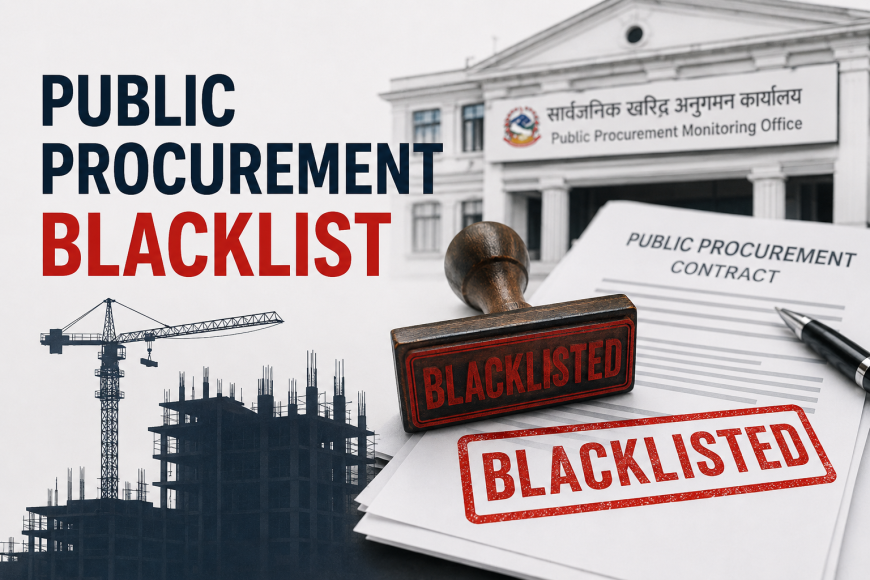
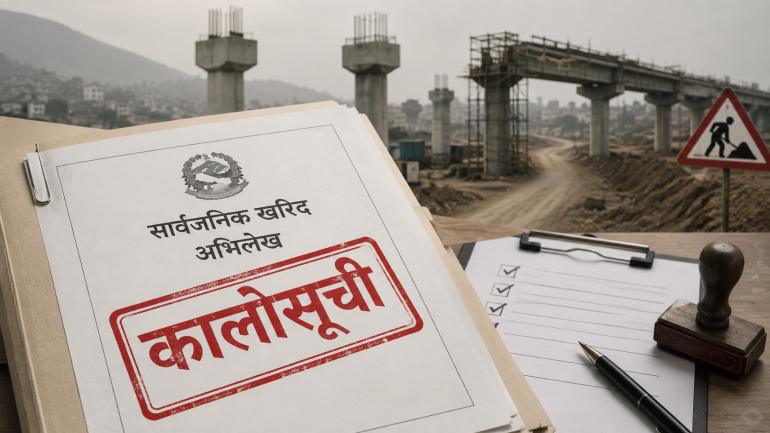
Nepal’s public procurement blacklist had 395 entries as of Ashar 17, 2083, with 262 still under active ban. Construction-related contracts account for the overwhelming majority of active cases, with 239 entries, or about 91 percent. Goods supply has 22 active entries, while consultancy has one. The data suggests that blacklist action is concentrated heavily in construction works, raising questions about contract execution, project monitoring, contractor evaluation and broader procurement management.
Kathmandu, July 2 — Construction contracts account for the overwhelming share of active blacklist action in Nepal’s public procurement system, according to records available on the Public Procurement Monitoring Office’s blacklist management system as of Ashar 17.
Of the 262 entries currently under active ban, 239 are related to construction works. That means more than nine out of every 10 active blacklist entries are linked to works contracts, including public infrastructure such as roads, bridges, buildings, water supply, irrigation and local development projects.
The office’s records showed 395 blacklist entries as of Ashar 17. Of them, 262 were active, 116 were suspended and 17 had been released from the blacklist. The figures are based on entries in the official system, not unique companies, as the same firm may appear in more than one case, contract or joint venture.
The concentration of blacklist action in construction is significant because public works contracts are directly tied to government development spending and service delivery.
When a bridge is delayed, local mobility is affected. When a public building remains incomplete, services may not begin on time. When water supply or irrigation projects stall, households, farms and local production systems can be affected.
The high share of construction-related entries points to recurring pressure in contract execution, deadlines, quality control and compliance with procurement agreements. It also raises questions about how public agencies assess contractors before awarding contracts and how effectively they monitor projects after signing them.
The issue, however, is not limited to contractors alone. Weak project preparation, unclear designs, unrealistic cost estimates, delayed decisions, budget or payment issues, land disputes, local obstruction and poor supervision can also affect the implementation of public works.
Goods supply accounts for 22 active blacklist entries. The number is much smaller than construction, but its impact can be immediate, particularly when the procurement involves hospitals, schools, security agencies, laboratories or information technology systems.
Delays in supply, failure to meet agreed specifications or delivery of substandard goods can disrupt routine public services. In sectors such as health, education, security and technology, procurement failures can quickly affect citizens and public institutions.
For that reason, supply-related blacklist entries cannot be treated as less important only because they are fewer in number.
Only one active blacklist entry is related to consultancy services. In the full blacklist record, consultancy accounts for three entries, with two currently suspended.
Although the number is small, consultancy services play an important role in the early stages of public projects. Feasibility studies, design, cost estimates, technical evaluation and supervision can shape the entire life cycle of an infrastructure project.
Weaknesses at this stage can later appear as cost overruns, delays, design changes or quality concerns during implementation. The consultancy figures are limited, but the sector remains important in understanding why some public projects face difficulties after contract award.
The trend is also visible in entries whose start dates fall within the current fiscal year 2082/83. Of the 214 entries recorded in the period, 196 were active and 18 were suspended.
Construction again made up the largest share, with 199 entries. Goods supply accounted for 14 entries and consultancy for one. This shows that the dominance of construction-related cases is not limited to older records but is also present in recent blacklist action.
The office’s formal classification shows 328 single entries and 67 joint venture entries among the 395 records.
Joint ventures are common in larger public contracts because they allow firms to combine technical capacity, financial strength and experience. But when implementation problems arise, questions of leadership, partner responsibility and accountability can become more complicated.
The presence of joint venture entries in the blacklist points to the need for stronger monitoring of partnership arrangements in large public contracts, including the role of the lead partner and the responsibilities of each participating firm.
Under Nepal’s public procurement rules, firms, suppliers, service providers, consultants and contractors placed on the blacklist are barred for a specified period from taking part in new procurement processes or bids conducted by public agencies.
The length of the ban varies depending on the decision and the nature of the case. Many entries in the record show restrictions of around one to three years.
Blacklisting is an important enforcement tool. It helps maintain discipline in public procurement and discourages repeated failure to comply with contract terms. But a large blacklist also points to a deeper governance question: whether problems are being addressed only after contracts fail, rather than being prevented earlier in the procurement cycle.
The data shows that action is being taken. It also suggests that procurement planning, contractor evaluation, contract management, payment systems, project supervision and timely decision-making need stronger attention if the same problems are not to keep returning.
Source: Analysis based on records available on the Public Procurement Monitoring Office’s blacklist management system as of Ashar 17, 2083.