


 साझा अर्थ संवाददाता
३० कार्तिक २०८२, आइतवार
साझा अर्थ संवाददाता
३० कार्तिक २०८२, आइतवार
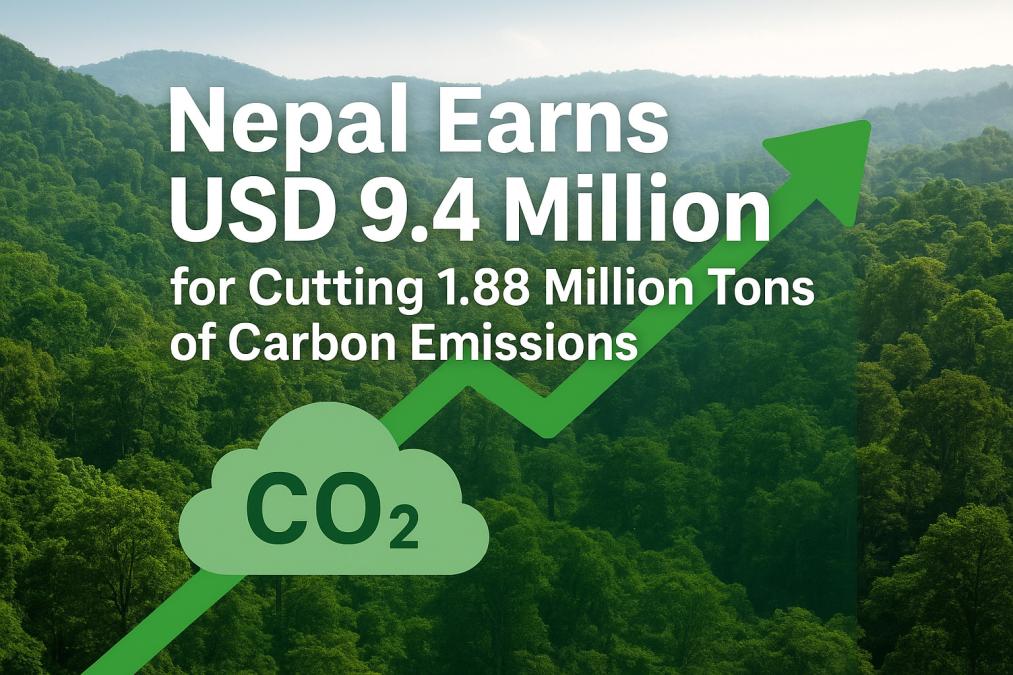
Nepal has received USD 9.4 million (around Rs 1.19 billion) from the World Bank for reducing 1.88 million tons of carbon dioxide under the REDD+ program in the Terai Arc Landscape. This marks Nepal’s first results-based payment under the Emission Reductions Payment Agreement, recognizing the country’s success in sustainable forest management and community-led conservation.
Kathmandu — Nepal has received USD 9.4 million (approximately Rs 1.19 billion) from the World Bank’s Forest Carbon Partnership Facility (FCPF) after successfully reducing 1.88 million tons of carbon dioxide under the REDD+ Emission Reductions Program in the Terai Arc Landscape.
This payment marks Nepal’s first-ever results-based climate finance under the Emission Reductions Payment Agreement (ERPA), a milestone that highlights the country’s strong commitment to combating deforestation and promoting sustainable forest management.
According to the World Bank, Nepal’s REDD+ program is internationally recognized for its community-based forestry model, bringing together community forest user groups, Indigenous communities, and civil society to restore degraded forests and protect biodiversity.
The REDD+ Emission Reductions Program was implemented across the Terai Arc Landscape, one of Nepal’s most biologically diverse regions.
Under the program, Nepal successfully:
The USD 9.4 million payment will be distributed based on Nepal’s Benefit Sharing Plan, designed through extensive consultations with local forest communities.
The funds will support:
The plan ensures that forest-dependent communities and Indigenous Peoples directly benefit from their conservation efforts.
David Sislen, World Bank Division Director for Maldives, Nepal, and Sri Lanka, stated:
“This milestone payment is testament to Nepal’s success in reducing deforestation, strengthening forest governance, enhancing biodiversity conservation, and expanding sustainable livelihood opportunities.”
Similarly, Dr. Rajendra Prasad Mishra, Secretary at the Ministry of Forests and Environment, remarked:
“This reflects the commitment and contribution of our communities and Indigenous Peoples in safeguarding Nepal’s forests through inclusive and sustainable management.”
The achievement strengthens Nepal’s position as a regional leader in climate finance, demonstrating how sustainable forest management can generate significant economic value.
With continued success, Nepal has the potential to receive millions more in future results-based carbon payments.