


 साझा अर्थ संवाददाता
१० वैशाख २०८२, बुधवार
साझा अर्थ संवाददाता
१० वैशाख २०८२, बुधवार

Abhishek kushwaha
Imagine Nepal’s stock market flooded with billions in foreign investments. Large institutional investors pouring money into high-cap sectors, banking stocks skyrocketing, and NEPSE reaching new heights. But what if this dream scenario also comes with risks, market crashes, manipulation, and economic instability? One of Nepal’s biggest investors, Dipendra Agrawal, strongly advocates for opening Foreign Portfolio Investment (FPI) and Foreign Institutional Investment (FII). In any podcast or interview, he consistently emphasizes one point: if Nepal’s stock market is to grow, Foreign Portfolio Investment (FPI) and Foreign Institutional Investment (FII) must be allowed. According to him, as long as FPI and FII remain restricted, high-cap sectors like banking will struggle to perform. But how true is this statement? Will opening FPI and FII truly help Nepal’s high-cap sectors thrive? And what exactly are FPI and FII? Let’s find out.
Understanding Foreign Investments:
Before diving into FPI and FII, we must first understand Foreign Direct Investment (FDI) since foreign investments come in various forms, including FDI, FPI, and FII.
Foreign Direct Investment (FDI) refers to foreign investors establishing companies or investing directly in Nepalese businesses. Simply, FDI means foreign investments in Nepal. For example:
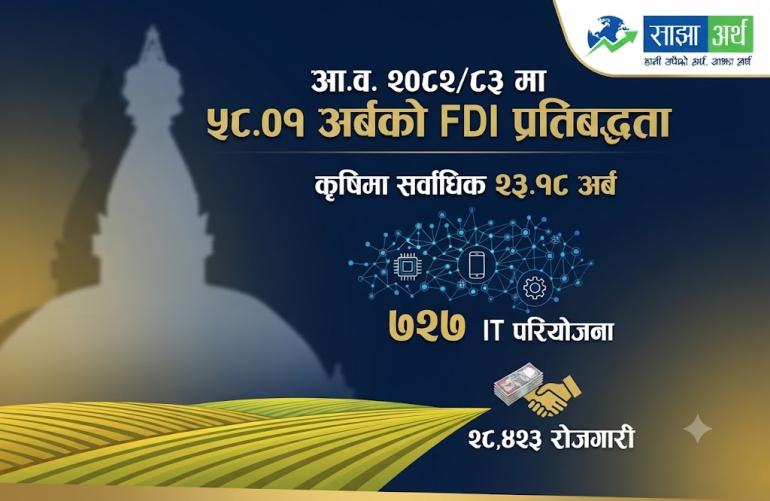
Any foreign investment made in Nepal is categorized as FDI. These investments significantly contribute to economic growth by creating job opportunities. According to the Department of Customs, Nepal received NPR 23.39 billion in investments across 200 different projects in the last six months of the financial year. This has led to the employment of nearly 10,000 Nepalese workers. Clearly, FDI plays a crucial role in job creation and economic development.
Now that we understand FDI, let’s move on to FPI and FII.
What Are FPI and FII Investments?
Foreign Portfolio Investment (FPI) and Foreign Institutional Investment (FII) involve foreign investors entering Nepal's capital markets.
For example, if a mutual fund in the United States sees growth potential in a Nepalese listed company, it can invest in Nepal's stock market (NEPSE). This allows American private investors to benefit from Nepal's market without directly purchasing shares themselves.
Unlike FDI, which focuses on long-term investments in projects and businesses, FPI and FII primarily involve short-term investments in Nepal’s stock market.
The Current Status of FPI and FII in Nepal
The Nepalese government has already opened the doors for FDI, but FPI and FII investments remain restricted. If Nepal were to allow FPI and FII investments, what benefits could it bring?
Benefits of Allowing FPI and FII Investments:
Potential Disadvantages of FPI and FII Investments:
Why Has Nepal Not Opened FPI and FII Investments?
Despite the advantages, the Nepalese government has been hesitant to open FPI and FII due to two primary reasons:
Will FPI and FII Help Nepal’s High-Cap Stocks Perform Better?
Returning to the question raised at the beginning, will FPI and FII help high-cap stocks like banking sector stocks perform better? The answer appears to be yes.
In summary, FPI and FII investments come with both advantages and disadvantages. While they can boost liquidity, expand the market, and enhance stock valuation, they also introduce risks like volatility, market manipulation, and currency depreciation. The main roadblocks preventing Nepal from opening FPI and FII investments are weak regulatory oversight and political instability. However, if these issues are addressed, allowing FPI and FII investments could be a game-changer for Nepal’s stock market.
Let’s wait and see how Nepal’s stock market evolves in the coming years. Thank you for reading !
साझा अर्थ संवाददाता